- Details
- Last Updated on Tuesday, 29 September 2026 14:43
Pro-life tour; Shangai, Beijing, Tianjin, GuangZhou
You may click the link to view the original content:https://mp.weixin.qq.com/s/0OBWebSyJ7SCnE6lc9QBcQ?scene=1


You may click the link to view the original content:https://mp.weixin.qq.com/s/0OBWebSyJ7SCnE6lc9QBcQ?scene=1

6th Annual Scientific Meeting of the Association for Haemophilia and Allied Disorders–Asia Pacific (AHAD-AP 2026). This meeting will be held in person in Bangkok, Thailand, from 10–13 September 2026, in collaboration with the Thai Society of Haematology.
Reengineering Coagulation with a Bispecific Antibody

Flora Peyvandi, M.D., Ph.D.1,2
For decades, the treatment of hemophilia A rested
on a single principle: replacing factor VIII (see Key
Concepts), the missing clotting factor. Plasma-
derived and recombinant factor VIII concentrates
transformed a once-fatal disease into a manage-
able chronic condition through prophylaxis and
treatment. But factor VIII has a relatively short
half-life and thus is administered through fre-
quent intravenous infusions, and neutralizing
anti–factor VIII antibodies (inhibitors) that render
replacement therapy ineffective develop in up to
one third of patients with severe hemophilia A.1-3
By showing that the coagulation cascade could be
activated in the absence of factor VIII, Kunihiro
Hattori, Tomoyuki Igawa, and Takehisa Kitazawa
(of Chugai Pharmaceutical) overcame these limi-
tations. They developed a bispecific antibody that
mimics blood coagulation factor VIII, an achieve-
ment recognized by the 2026 Lasker–DeBakey
Clinical Medical Research Award.
https://www.nejm.org/doi/full/10.1056/NEJMcibr2608873

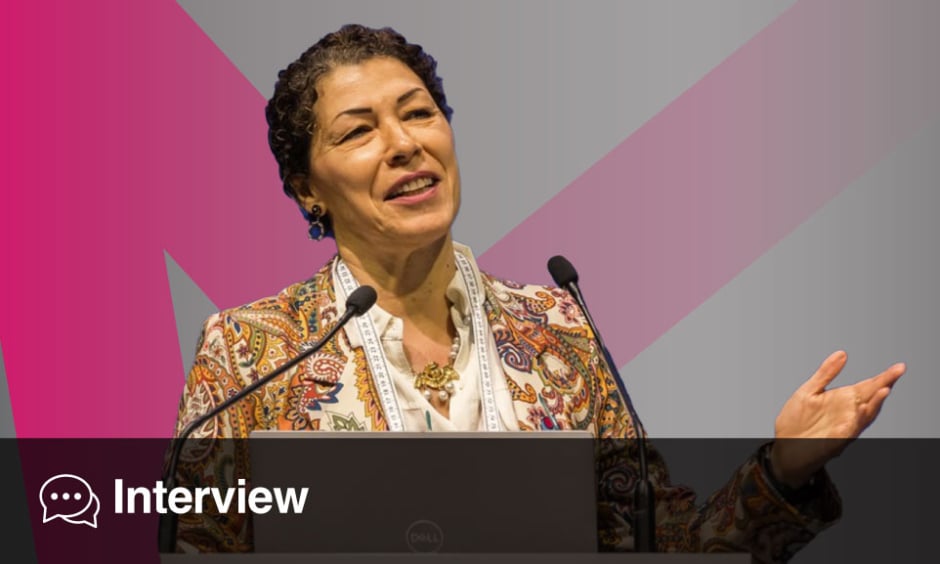
Flora Peyvandi | Professor of Internal Medicine, University of Milan, Italy; European Association for Haemophilia and Allied Disorders (EAHAD) Congress President
Citation: EMJ Hema. 2024;12[1]:xx-xx

I love to do medicine, and I always wanted to do internal medicine-haematology, because I thought haematology was just facing up to blood, and blood is everywhere in every organ. That was one of the main reasons. I was very interested in the process of clotting and the complexity of clotting, and then I ended up being interested in the bleeding area, which is part of haematology.
23 gennaio 2026 ore 14:00 – 17:30
Sala Rappresentanza, Università degli Studi di Milano
Via Festa del Perdono 7 – 20122 Milano
